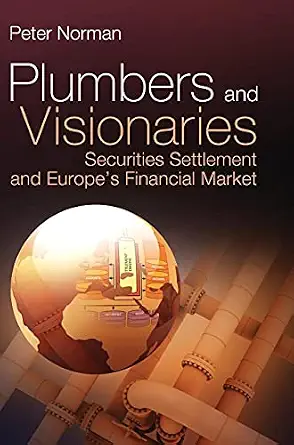
Plumbers and Visionaries: Securities Settlement and Europe's Financial Market (The Wiley Finance Series)

Securities Clearing, Settlement and Risk Management: Post-trade Infrastructure

Clearing, Settlement and Custody
Best Security Settlement Buying Guide — Black Friday Deals 2026
Are you trying to understand how securities move from a trade to settlement, or why the institutions behind that process matter? Those are related questions, but they call for different reading. This shortlist includes a European industry history, a concise treatment of settlement models and risk management, and a broader account of post-trade institutions. The Black Friday label can make a listing feel urgent; it does not tell you which subject fits your purpose or whether a particular offer is worthwhile. Start with the question you want the book to help you explore, then check the exact edition and format shown on the listing before comparing offers.
Plumbers and Visionaries: Securities Settlement and Europe's Financial Market (The Wiley Finance Series)
Check Price on Amazon
Best Overall is an editorial fit for readers whose starting point is the securities settlement industry in Europe: the stated subject is its history and future. Written by Peter Norman and published by Wiley, this English-language first edition was published on January 29, 2008, and runs 368 pages. Those details help set expectations: it is the longest listed reading commitment, and its subject is specifically European rather than settlement in the abstract. If your project involves understanding how the industry developed and thinking about its future, that framing gives you a clear reason to put it first on your shortlist.
The history-and-future focus may suit a reader who wants context for a discussion, a course of independent reading, or a personal reference about the European market. It is not described in the supplied details as a step-by-step guide to a particular settlement model, so choose it for the stated industry perspective rather than expecting a narrowly defined operational manual. The publication date is useful context for deciding whether that perspective matches your question; it is not, by itself, proof that the book will or will not serve a present-day purpose.
For Black Friday, compare the exact listing against your intended use: confirm the title, Peter Norman as author, Wiley as publisher, first edition, English language, and 368-page print length. The Best Overall label expresses an editorial recommendation among these three books, not a measured result or a claim that it suits every reader. If your main need is European industry history and future-facing context, it is a sensible first candidate. If you primarily want coverage of institutional roles or models and risk management, compare those alternatives before allowing a seasonal offer to decide.
Key specs
| Author | Peter Norman |
| Publisher | Wiley |
| Publication date | January 29, 2008 |
| Edition | 1st |
| Language | English |
| Print length | 368 pages |
| Subject | the history and future of the securities settlement industry in Europe |
Securities Clearing, Settlement and Risk Management: Post-trade Infrastructure
Check Price on Amazon
Best Budget is the editorial label for the most compact reading commitment in this group, not a statement about price. Published independently on July 12, 2022, this English-language book has a print length of 102 pages. Its listed topics are securities settlement models and schemes, alongside best practices on risk management in the area of clearing and settlement. That combination makes it a relevant option when your question is about how settlement approaches are framed and what risk-management practices the subject raises, rather than the history of a regional industry.
The shorter stated length can be useful when you want a bounded introduction to the listed topics or need to plan a limited reading window. Page count alone does not establish how much detail any topic receives, so avoid treating compact length as proof of either simplicity or completeness. Likewise, the risk-management description identifies an area of focus, but does not name specific models, procedures, or types of reader. Use the subject description to decide whether the book aligns with your question, then treat the listing as the authority for the copy you are considering.
During Black Friday browsing, verify that the listing is for the intended title and shows the matching publication date, language, 102-page print length, and ISBN-13 979-8840437780. The Best Budget label does not promise a low price or a discount; it reflects the comparatively compact scope indicated by the supplied facts. If you want a short reading commitment centered on settlement models and clearing-and-settlement risk management, this is the clearest fit in the group. If your priority is a named account of institutional roles or European industry history, compare the other books instead.
Key specs
| Publisher | Independently published |
| Publication date | July 12, 2022 |
| Language | English |
| Print length | 102 pages |
| ISBN-13 | 979-8840437780 |
| Topics | Securities Settlement Models and Schemes |
| Risk management topic | The best practices on risk management in the area of clearing and settlement |
Clearing, Settlement and Custody
Check Price on Amazon
Best for understanding post-trade institution roles is an editorial label grounded in this book’s stated coverage. The third edition, published by Butterworth-Heinemann on October 27, 2019, has a print length of 330 pages. Its description says it examines the roles of clearing houses, central counterparties, central securities depositories, and custodians. That makes it the most directly aligned choice here if you are trying to distinguish the institutions involved in post-trade activity, rather than focus first on European industry history or settlement models and risk management.
The named coverage gives a practical way to judge fit before buying. For example, if you are preparing to follow a conversation that mentions several of those institution types, the stated scope offers a reason to consider this title as a reference for understanding their roles. The details do not specify how the coverage is organized or how much space is devoted to each institution, so do not assume a particular level of technical depth. Its 330-page length is a planning clue, not a guarantee of the amount of detail or the time you will need.
For a Black Friday purchase, check that the listing identifies the third edition and the stated publisher, publication date, and print length. The recommendation label is a shopper-facing fit judgment based on the named coverage, not a claim of proven superiority over the other books. Choose this one when the institutional map is your priority. If your question is instead about Europe’s securities settlement industry over time, the history-focused choice may be a better match; for settlement models and risk-management practices, compare the shorter book’s stated topics.
Key specs
| Publisher | Butterworth-Heinemann |
| Publication date | October 27, 2019 |
| Edition | 3rd |
| Print length | 330 pages |
| Coverage | examines the roles of clearing houses, central counterparties, central securities depositories, and custodians |
Choose the question before the format
A useful shortlist begins with the distinction you need to understand. Is your interest the history and future of securities settlement in Europe, the models and schemes used for settlement, or the roles of institutions after a trade? The first book explicitly takes the European industry perspective; the second lists settlement models and risk management; the third names clearing houses, central counterparties, central securities depositories, and custodians. These are connected areas, but the supplied descriptions do not make the books interchangeable. Write down the question you want to return to, then compare each title’s stated subject against it.
This approach is especially helpful if you are buying for a class, colleague, or personal reading plan and cannot yet say which book will be most useful. Consider what prompted the search: a need for historical context points toward the European industry subject; curiosity about models and risk points toward the book that lists those topics; confusion about institutional responsibilities points toward the book with the named post-trade roles. Black Friday can be a convenient time to compare listings, but it should come after this fit check. A seasonal banner cannot establish that a title addresses your particular question.
Plan a reading commitment around the stated length
The print lengths give you a practical way to plan, without pretending to measure quality or depth. The European industry book is 368 pages, the post-trade institution book is 330 pages, and the models-and-risk book is 102 pages. If you have a short period available, the 102-page option represents the smallest stated reading commitment. If you are planning a longer reading project, the other two have longer listed print lengths. None of those figures tells you how quickly you will read or how much detail each subject receives, so use them as scheduling information rather than a verdict.
Think about the setting in which you expect to use the book. A reader with time for a sustained subject exploration may be comfortable with a longer listing, while someone assembling a focused introductory reading plan may prefer to start with the shortest one. You could also choose based on the question and only then decide whether the length works for your schedule. During Black Friday, it is easy to let a deal prompt an unplanned purchase. A simple commitment check—when you will read, and what you hope to understand—can keep the purchase connected to an actual use.
Treat publication details as useful context
Publication dates and editions help identify what you are considering, but they do not settle the question of fit. The European history-and-future book is a first edition published January 29, 2008; the models-and-risk title was published July 12, 2022; and the institution-focused book is a third edition published October 27, 2019. These details may matter if you are comparing a listing with a reading suggestion or making sure you have the intended edition. They do not establish whether a book includes a particular current rule, example, or update, so do not infer those details from a date alone.
Use this information as a prompt for a careful listing check. Confirm the edition where one is specified, and make sure the title and other identifying details match the book you meant to consider. If your need depends on a very particular topic or on material from a specific period, the supplied summaries may not answer that question; base your decision on the exact listing information available to you rather than assuming extra coverage. This is a worthwhile pause during Black Friday, when a seasonal offer may draw attention away from the bibliographic details that distinguish one intended copy from another.
Compare offers only after confirming identity
A Black Friday offer is meaningful only when it applies to the exact book and format you intend to buy. Begin with the title, then check the listed publisher or author where supplied, publication details, language, and print length. For the independently published title, the ISBN-13 979-8840437780 offers another specific identifier to compare with the listing. For the other two books, use the provided author or publisher and edition details as part of your identity check. Do not assume that a seasonal label alone tells you which edition or version appears in the offer.
Once the identity matches, compare the actual terms displayed on the listing with your own shortlist. The available product facts do not provide a current price, discount, stock status, or seller policy, so there is no basis here for declaring one offer better value. Instead, decide whether the listed copy matches your subject, language, and intended use, then assess whatever offer details are actually shown at purchase time. Keeping identity and fit ahead of the promotion helps prevent a rushed choice and makes the seasonal comparison specific rather than speculative.
Choose a role for the book in your reading plan
These titles can occupy different places in a reader’s plan. You might choose the European industry history-and-future perspective to orient a broader inquiry, the book listing settlement models and risk management to focus on those subjects, or the post-trade coverage to make sense of the named institutions. Those are use cases suggested by the stated topics, not promises about a particular teaching style or reference structure. If you are buying for someone else, match the choice to the questions they are already asking rather than guessing from the broad phrase securities settlement.
A practical final step is to write a one-line reason beside each candidate: what question it addresses, what listed detail supports that match, and whether its length fits your reading plans. Then review the exact Black Friday listing for title and edition identity before deciding whether the offer suits you. This also makes it easier to decline a promotion that points toward the wrong subject. A deliberate purchase may be the history-focused book, the concise models-and-risk option, or the institutional overview; the best fit depends on the reader’s purpose, not on a general ranking.
Make your Black Friday choice
For a final Black Friday check, match the book to your question first: European industry history and future, settlement models and risk management, or the roles of post-trade institutions. Then verify the exact title and relevant edition, language, publisher or author, print length, and ISBN where provided. Treat length as a planning clue and publication date as context, not as evidence of an unstated feature. Finally, compare only the offer details shown for the listing you intend to buy. That sequence keeps your decision tied to subject fit and the exact copy, rather than letting a seasonal promotion make the choice for you.