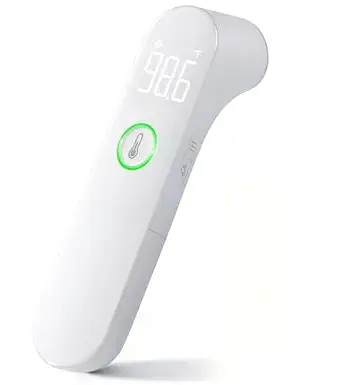
Viproud Thermometer for Adults and Kids
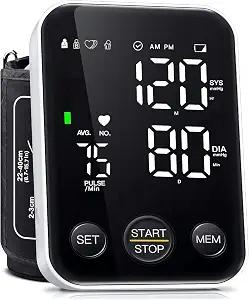
Oklar Blood Pressure Monitor Upper Arm BP Machine
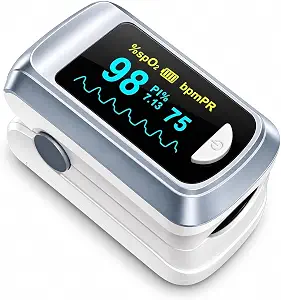
Fingertip Pulse Oximeter
Best Home Health Care Buying Guide — Black Friday Deals 2026
Home health care shopping is easier when each device has a defined job: checking temperature, recording blood pressure, or viewing oxygen saturation and pulse rate. These products cover those different tasks, but their listed features do not establish which is right for a particular person or care plan. Start with the reading you intend to keep track of, then consider the interface, memory, power, and fit details that could shape everyday use. During Black Friday, treat a deal headline as an invitation to compare—not proof of a discount. Confirm the exact product and selected variant, and weigh its listed features against your needs before deciding.
Viproud Thermometer for Adults and Kids
The Viproud Thermometer for Adults and Kids is a sensible choice when the planned home check is temperature and a non-contact method is a priority. Its listed response time is 1 seconds, and the stated temperature range runs from 89.6 °F to 109.2 °F. Those details help shoppers check whether the stated range and response time suit their intended routine; they do not, by themselves, establish how a reading should be interpreted. The product name identifies adults and kids as intended users, but follow the product instructions for use rather than assuming a particular technique.
Memory is another practical point: the thermometer stores 35 sets of readings. That may help someone who wants a record to refer back to, while a household that does not plan to review past readings may place more weight on straightforward operation. The display units are switchable between ℉ and ℃, so consider which format the intended user finds easier to read. Two AAA batteries are included, and the device has a 30 seconds auto shut-off function. These are useful details to check when planning where it will be kept and how battery replacement will fit into the routine.
Among these options, this is the Best Overall editorial choice because its non-contact measurement method, stored readings, and switchable units bring several relevant temperature-check features together. That is a reasoned fit for a shopper seeking a general-purpose thermometer, not a claim that it is best for every household. For Black Friday, inspect the exact listing and variant, then confirm that the stated range, memory, and power details match what you want. Do not let an event label replace that comparison, and use readings as information rather than as a diagnosis.
Key specs
| Measurement method | Non-Contact |
| Response time | 1 seconds |
| Temperature range | 89.6 °F |
| Upper temperature range | 109.2 °F |
| Batteries | 2 AAA batteries required. (included) |
| Memory | 35 sets of memory storage |
| Temperature units | ℉/℃ switchable |
| Auto shut-off | 30 seconds auto shut-off function |
Oklar Blood Pressure Monitor Upper Arm BP Machine
Check Price on Amazon
For someone planning to keep a blood pressure record at home, the Oklar Blood Pressure Monitor is notable for supporting two users and storing 120 readings per user. That capacity can suit a routine where two people want their readings kept in separate user records. It does not say how a person should interpret those readings, so decide with the intended user what information they need to retain and follow any care instructions they have received. The one-button operation and backlit LED screen with clear digits are also relevant if the person using the monitor wants a simple stated control and a screen designed for legibility.
The product is described as an upper-arm monitor, with a cuff range of 8.7 – 15.7 inches (22-40 cm). Check the intended user’s measurement against that exact listed range before choosing it; fit is a practical prerequisite for deciding whether this is the appropriate format. The monitor can be powered by 3AA batteries or a Type-C interface, and the listing says it is not rechargeable. A reading time of within 1 minute gives another point to compare with the household’s routine. The power options and non-rechargeable status are worth considering together, rather than assuming a particular cable or accessory is included.
This is the Best for shared blood pressure tracking editorial selection because its stated two-user support and per-user memory address a clear record-keeping need. That rationale is based on the listed function, not a comparison of measured accuracy or overall performance. During Black Friday, verify that the exact item and selected variant retain the user-memory and cuff details you want, then compare the offer on that basis. If only one person will use it, the shared records may matter less than cuff fit, screen readability, or the power arrangement. Keep home readings within the context of appropriate care guidance.
Key specs
| Operation | one-button operation |
| Display | backlit LED screen with clear digits |
| Reading time | get readings within 1 minute |
| Memory | Supports two users, storing 120 readings per user |
| Power | 3AA batteries or a Type-C interface |
| Rechargeability | This product is not rechargeable |
| Cuff range | 8.7 – 15.7 inches (22-40 cm) |
Fingertip Pulse Oximeter
The Fingertip Pulse Oximeter is the option here for a shopper whose planned check is SpO2 and pulse rate. Its bright screen displays SpO2, pulse rate, and signal strength, while a waveform bar graph provides visual confirmation of pulse strength. One-button operation keeps the stated control approach simple. These details describe what the screen presents and how the product is operated; they do not establish whether a reading is suitable for a particular person or what action should follow it. Consider whether the intended user can see and use the displayed information comfortably.
The listed dimensions are 2.25 x 1.2 x 1.25 inches, and the weight is 2.4 ounces. A lanyard is included for carrying, and the product requires 2 AAA batteries, which are included. Auto power-off is described as a battery-saving feature. These points help a shopper think through storage, carrying, and battery planning without assuming anything about performance beyond the stated details. If the device is intended to stay in one place, carrying convenience may be less important; if it will be moved between locations, the listed size and lanyard may be relevant.
This is the Best Budget editorial choice among these products, with the rationale grounded in its compact listed dimensions, one-button operation, and included carrying lanyard—not an assumption about its price or a claim of market-wide value. For Black Friday, compare the exact product and selected variant, check that the displayed measurements and included items are the ones you expect, and judge the offer only after those details are clear. A low-friction interface may suit some routines, while another shopper may prioritize a different type of reading. Use the product within appropriate care guidance.
Key specs
| Display | Bright screen clearly shows SpO2, pulse rate, and signal strength |
| Pulse indicator | The waveform bar graph provides visual confirmation of pulse strength |
| Operation | One-button operation |
| Power saving | Auto power-off preserves battery life. |
| Dimensions | 2.25 x 1.2 x 1.25 inches |
| Weight | 2.4 ounces |
| Batteries | 2 AAA batteries required. (included) |
| Included accessories | 1x Lanyard for easy carrying |
Give the device a clear role in the routine
Begin with the question the household actually wants a device to help track. A thermometer, an upper-arm blood pressure monitor, and a fingertip pulse oximeter are not interchangeable choices: each listing describes a different kind of reading. Selecting by task keeps an appealing feature from distracting from the intended use. For example, stored readings may matter when someone wants to review a record, while a particular display may matter more to the person who will read it.
Make the planned user part of the decision. Consider who will operate the device, who will view its screen, and whether readings are meant to be kept for later reference. A saved record can help organize information, but the existence of memory does not explain what the readings mean. Use any device as part of an appropriate care routine, not as a substitute for guidance about interpreting results. During Black Friday, keep this task-first shortlist in view so a promoted feature does not turn into a purchase that solves a different problem.
Match the interface to the person at home
Interface details are easiest to judge in the context of the intended user. The Oklar monitor specifies one-button operation and a backlit LED screen with clear digits. The pulse oximeter also specifies one-button operation, with a bright screen that presents several pieces of information and a waveform bar graph. The Viproud thermometer offers switchable temperature units. These are different kinds of convenience; choose the one that relates to the user’s actual task rather than treating a feature list as a general measure of ease.
Think about where a device will be used and whether the person can comfortably follow its instructions and read its output. The listed screen descriptions do not establish how every person will find them, so personal needs still matter. Black Friday comparisons are more useful when they account for the intended user instead of focusing only on the event label. If a family member will use the device, involve them in checking the controls and display information before settling on a listing.
Treat stored readings as a record-keeping decision
Memory can be useful when it supports a specific record-keeping plan. The thermometer stores 35 sets of readings, while the blood pressure monitor supports two users and stores 120 readings per user. The pulse oximeter’s listed features do not specify stored readings, so focus its comparison on the details that are provided rather than assuming a record function. Decide who will use saved information, how it will be reviewed, and whether a shared or separate record is relevant.
More stored entries do not automatically make a device a better choice. A person who will not revisit saved information may prefer to give greater attention to fit, controls, or power. Someone keeping a record may want to establish a consistent way to note readings and share them with an appropriate care professional when needed. During Black Friday, confirm that the memory description belongs to the exact item and variant under consideration. Treat stored results as information to manage thoughtfully, not as a diagnosis or a standalone decision rule.
Check fit, placement, and power before purchase
Physical details can determine whether a listed format suits the intended routine. The blood pressure monitor’s cuff range is 8.7 – 15.7 inches (22-40 cm), so check that against the intended user rather than guessing. The pulse oximeter lists dimensions of 2.25 x 1.2 x 1.25 inches and a weight of 2.4 ounces; its lanyard may be relevant if carrying is part of the plan. The thermometer’s non-contact method is stated, but shoppers should follow its instructions for placement and use rather than infer an unstated technique.
Power arrangements deserve a separate check. The thermometer and pulse oximeter each list 2 AAA batteries required, with batteries included. The blood pressure monitor lists 3AA batteries or a Type-C interface and says it is not rechargeable. Do not assume a cable or other unlisted accessory comes with a product. Think about where the device will live, what power source is practical there, and how replacement batteries would be handled. These checks matter just as much in a Black Friday comparison as the headline feature.
Compare Black Friday offers by the exact configuration
A Black Friday label does not establish that an offer is discounted, nor does it confirm that the selected item is the one you intended. Compare the exact product name and variant, then check the relevant facts: measurement method and range for the thermometer, cuff range and user memory for the blood pressure monitor, or displayed information and included accessories for the pulse oximeter. Review the selected configuration before making a decision, and do not assume that an offer headline describes every option shown on a listing.
Keep the comparison grounded in the features that matter to your plan. A deal is not automatically suitable because it includes memory or a particular screen; those details have value only if they serve the intended user. Avoid filling gaps in a listing with assumptions about performance, compatibility, or included items. During Black Friday, compare what is explicitly stated for the exact selection and decide whether it meets your needs. If the details are unclear, pause rather than treating urgency language as evidence.
Make your Black Friday choice
A useful home health care choice starts with a specific routine, not the event surrounding the purchase. Match the thermometer, blood pressure monitor, or pulse oximeter to the reading you intend to track, then check the person-facing details: display, controls, memory, fit, and power. The editorial selections here reflect different listed features, not a promise of suitability for every household. During Black Friday, verify the exact item and variant and compare only the offer details available to you; no promotion should be assumed from the occasion alone. Use readings thoughtfully and follow appropriate care guidance.