Google Nest Thermostat – Snow
ecobee Smart Thermostat Essential
Best Smart Thermostat Buying Guide — Black Friday Deals 2026
Which thermostat will fit your heating and cooling system, and which control routine will your household actually use? Those are better first questions than asking which model has the most features. These three options take different approaches: one is closely tied to Alexa, one offers Google Assistant compatibility and app scheduling, and one supports several major smart-home ecosystems. Wiring needs also differ, so check the thermostat’s requirements against your system before making a shortlist. Black Friday can be a useful time to compare candidates, but an advertised offer does not answer whether a model suits your home. Confirm the exact product and included setup details in the listing, then weigh its controls and compatibility against your needs.
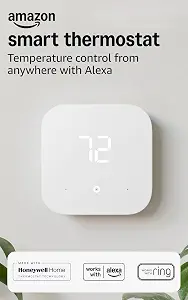
Amazon Smart Thermostat
Best Budget is the editorial label assigned to this option, not a statement about its current price or a verified Black Friday discount. Its clearest fit is a household that already uses Alexa or Ring: the thermostat works with both. Alexa can automatically switch among preferred home, away, and sleep temperatures, while the Alexa app lets you set the temperature yourself from anywhere. That offers two distinct ways to manage comfort—an automatic routine for familiar parts of the day and a remote adjustment when plans change. Think about which of those control paths your household is likely to use before placing it on your shortlist.
The main practical constraint in the listed specifications is wiring: a C wire is required. Check the wiring at your thermostat and confirm the system details before you buy, especially if you are comparing it with a model designed to work without a C wire in many homes. The Alexa app is described as guiding the installation process, which may help you follow the setup steps, but it does not change the stated wiring requirement. If you cannot confirm the wiring or are uncertain about installation, seek appropriate help before treating an attractive Black Friday offer as a complete solution.
The product is made with Honeywell Home Thermostat Technology. For added comfort-zone options, the listing says select Echo devices or an Amazon Smart Air Quality Monitor can be used to adjust heating and cooling automatically based on temperature readings or presence detection. That option is relevant if you already have, or are considering, one of those named devices; the supplied details do not establish that every Echo device supports it. Black Friday shoppers should distinguish this optional setup from the thermostat’s core Alexa app controls and verify which devices they would need. The Best Budget label is therefore a starting point for comparing fit, not evidence of the lowest offer.
Key specs
| Compatibility | Works with Alexa and Ring |
| Wiring | C-wire required |
| Temperature control | Alexa can automatically switch between your preferred home, away, and sleep temperatures. |
| Remote control | set it yourself from anywhere with the Alexa app. |
| Installation | The Alexa app will guide you through the installation process |
| Technology | Made with Honeywell Home Thermostat Technology |
| Comfort zones | using select Echo devices or Amazon Smart Air Quality Monitor to automatically adjust heating and cooling based on temperature readings or presence detection. |
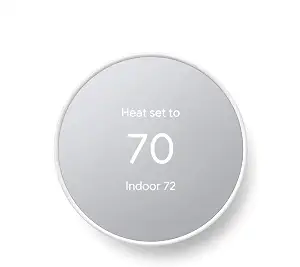
Google Nest Thermostat – Snow
Best Overall is the editorial choice here for shoppers who want app scheduling and remote access alongside Google Assistant compatibility. You can program an energy-efficient schedule in the Google Home app on an Android phone or iPhone, then family members can change the temperature remotely using a phone, laptop, or tablet. That can suit a household whose routines vary and where someone may want to adjust the thermostat while away. Wi-Fi connectivity is listed, and voice control requires a compatible smart device; check that requirement against the devices you already use rather than assuming voice control works by itself.
Its wiring flexibility is worth checking carefully. The Nest Thermostat is designed to work without a C wire in most homes, but the listing specifies that some systems—including heating only, cooling only, zone controlled, and heat pump systems—need a C wire or another compatible power accessory. If you know your system falls into one of those categories, treat that requirement as a key part of the decision, not a detail to resolve after purchase. If you are unsure what wiring or system type you have, verify it before choosing. Black Friday pricing should not outweigh a power requirement that may change what the installation involves.
This model earns the Best Overall label among these listed choices because its combination of app scheduling, remote temperature changes, and Google Assistant compatibility offers a clear everyday control path. The label is an editorial fit, not a measured claim or a market-wide award. Before buying during Black Friday, compare the exact listing and confirm that it is the Snow version shown here; do not assume a similarly named product has identical details. Also consider whether the people in your home will use the Google Home app and whether the thermostat’s conditional C-wire guidance matches your HVAC setup. Those checks make the choice more useful than selecting by label alone.
Key specs
| Scheduling | easily program an energy efficient schedule in the Google home app on your Android or iPhone |
| Remote control | Remote control lets family members change the thermostat temperature from anywhere on a phone, laptop, or tablet[1] |
| C-wire compatibility | The Nest Thermostat is designed to work without a C wire in most homes, but for some systems, including heating only, cooling only, zone controlled, and heat pump systems, you’ll need a C wire or other compatible power accessory. |
| Voice assistant compatibility | Compatible with Google Assistant and all Matter-certified voice assistants. |
| Voice control requirement | Voice control requires a compatible smart device. |
| Connectivity | Wi-Fi |
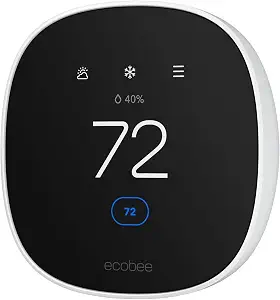
ecobee Smart Thermostat Essential
Check Price on Amazon
Best for Multi-Ecosystem Households is the editorial fit for the ecobee Smart Thermostat Essential. The listed compatibility includes Apple HomeKit, Google Assistant, and Alexa, so it is worth considering when people at home use different supported smart-home platforms. Its Wi-Fi connectivity and LCD screen, listed as 3.74 inches, round out the basic details to compare against your preferences. Compatibility is not a guarantee that every feature behaves identically across platforms, so check the specific controls you intend to use. For a Black Friday shortlist, this model stands out most clearly when ecosystem choice is a real household consideration.
The HVAC compatibility details cover most 24 VAC equipment, with examples including gas, oil, electric, dual fuel, forced air, heat pump, and boilers, subject to the configurations specified in the listing. The product information also offers a Power Extender Kit for homes without a C wire. Treat both details as items to verify, not as a substitute for checking your own equipment: confirm the system type and configuration, and check whether the no-C-wire option applies to your installation. If your setup is unusual or unclear, get the system information confirmed before deciding. A seasonal offer is useful only if the exact model and your equipment are a match.
The built-in eco+ features listed include indoor humidity detection, a schedule assistant, and time of use, which preheats or precools the home when energy is less expensive to reduce energy use during peak hours. The product can also use an optional SmartSensor to measure temperature and movement in a selected room; the SmartSensor two-pack is sold separately. These details may matter if you want room readings or the listed scheduling features, but consider the separate accessory as part of the overall decision rather than assuming it is included. During Black Friday, compare the exact listing and any separately offered components. The recommendation label reflects its ecosystem breadth among these choices, not a performance ranking.
Key specs
| Connectivity | Connectivity Technology Wi-Fi |
| Display | LCD Screen Size 3.74 inches |
| Smart home compatibility | Works with leading smart home ecosystems. Pair Smart Thermostat Essential with Apple HomeKit, Google Assistant, and Alexa |
| HVAC compatibility | Works with most 24 VAC HVAC equipment: Gas, oil, electric, dual fuel, forced air Conventional (2H/1C or 1H/2C) Heat Pump (2H/1C) Boilers. |
| C-wire option | No C Wire, no problem. Get the ecobee Power Extender Kit (PEK) for homes without a C-Wire |
| Additional features | Built in eco+ Smart Features: Indoor humidity detection, schedule assistant, time of use which preheats or precools your home when energy is less expensive to reduce energy use during peak hours |
| Optional sensor | Add in a SmartSensor which allows you to measure the temperature in rooms that matter most. It reads temperature and movement in whatever room it is placed in for complete home monitoring and energy savings (SmartSensor 2 pack sold separately) |
Confirm what your HVAC setup can support
Start with the system you have, not a feature checklist. Identify the heating and cooling equipment and, if possible, determine the wiring at the current thermostat. The Amazon Smart Thermostat requires a C wire. The Google Nest Thermostat is designed to work without one in most homes, but its listing names system types that may need a C wire or another compatible power accessory. The ecobee listing describes compatibility with most 24 VAC HVAC equipment and offers a Power Extender Kit for homes without a C wire. Those are different qualifications, not interchangeable guarantees.
If you do not know whether your home has a C wire, do not guess based on the thermostat’s appearance or a seasonal promotion. Check reliable system documentation or ask a qualified person to identify the wiring and equipment. For the ecobee, compare your exact configuration with the listed HVAC types; for the Nest, pay particular attention to the stated exceptions. Black Friday may bring several tempting listings into view, but the right first filter is whether the exact thermostat can be used with your system. Add any power accessory or installation requirement to your comparison before considering the offer.
Choose the household’s preferred control path
Think about who will adjust the temperature and what devices those people already reach for. The Amazon option pairs with Alexa and Ring, and its temperature control can follow preferred home, away, and sleep temperatures. It also supports remote adjustments through the Alexa app. The Nest provides app-based scheduling in Google Home and remote temperature changes from a phone, laptop, or tablet, while its voice compatibility is with Google Assistant and Matter-certified voice assistants; voice control requires a compatible smart device. The ecobee lists Apple HomeKit, Google Assistant, and Alexa compatibility.
These distinctions are more useful than a broad claim that one app or assistant is best. If the household shares one ecosystem, familiar controls may be more important than a longer compatibility list. If household members use different supported platforms, the ecobee’s listed options may deserve closer consideration. Check which devices and apps people actually use, and verify any voice-control requirements that matter to you. Black Friday can make comparison feel urgent, so settle this household question before browsing offers. A product label cannot tell you whether the people at home will find its control route convenient.
Decide which routines should be automatic
A schedule and an automatic response to changing conditions are not quite the same kind of control. With the Amazon Smart Thermostat, Alexa can switch between preferred home, away, and sleep temperatures. The Nest lets you program an energy-efficient schedule in the Google Home app. The ecobee lists a schedule assistant as part of eco+ and a time-of-use feature that preheats or precools when energy is less expensive, with the stated aim of reducing energy use during peak hours. Consider which description matches your day: repeated time-based patterns, named temperature preferences, or the listed time-of-use behavior.
Keep expectations tied to the available details. The listings do not provide a basis for predicting a particular household’s energy bill or the amount of any reduction. Instead, ask whether you want to create a schedule, make remote changes when plans shift, or use the specific automatic features described for a product. If you rarely want a thermostat to act without a manual adjustment, simpler controls may be the priority. If you do want routines, consider how you would set them up and which app you would use. During Black Friday, compare the actual control features rather than assuming every smart thermostat automates temperature in the same way.
Look at room information as an optional planning tool
Room-level information is relevant only if it answers a comfort question you actually have. The Amazon listing describes automatic heating and cooling adjustments based on temperature readings or presence detection when used with select Echo devices or an Amazon Smart Air Quality Monitor. The ecobee can pair with an optional SmartSensor that reads temperature and movement in the room where it is placed; the SmartSensor two-pack is sold separately. These are different arrangements, and the Amazon detail specifically limits the feature to select Echo devices or the named monitor.
Before including either option in your plans, identify the room or situation you want to address and check which additional device is involved. For ecobee, account for the optional sensor rather than assuming it comes with the thermostat. For Amazon, verify whether your Echo device is among those that support the described adjustments or consider the named monitor. The supplied details do not describe equivalent room sensing for every model, so avoid treating the options as a direct feature-for-feature match. A Black Friday listing may emphasize a thermostat alone; check the exact contents and any separately purchased items before comparing complete setups.
Build a Black Friday comparison around the exact listing
A product name or recommendation label is not enough to establish what a particular offer includes. Confirm the exact model, finish where relevant, and product identity; for the Nest option here, the listed version is Snow. Read the listing details for the thermostat itself and any accessories you need to meet its wiring or room-sensing requirements. Do not infer a discount, included component, or compatibility detail from a headline or from another version’s description. The current offer must be evaluated on its own terms, and no price or promotion is established by this guide.
Then compare practical fit in a consistent order: HVAC compatibility, C-wire requirements, app and assistant preferences, and the automatic or optional features you genuinely expect to use. Keep the recommendation labels in perspective: Best Overall, Best Budget, and Best for Multi-Ecosystem Households are editorial choices among these three products, not test results or assurances about market-wide value. Black Friday is a reason to check the exact offer carefully, not a reason to skip basic compatibility checks. If one detail remains unclear, resolve it before ordering rather than assuming a listing will answer it after arrival.
Make your Black Friday choice
For the final choice, match the thermostat to your HVAC system and wiring first, then choose the app, assistant, and routine that suit the people at home. The Nest offers app scheduling and remote control, the Amazon model centers on Alexa and requires a C wire, and ecobee lists several smart-home ecosystems alongside optional room sensing. Before completing a Black Friday purchase, confirm the exact model and listing, verify any C-wire or power-accessory needs, and check whether optional devices are sold separately. Compare the actual offer only after those details are clear. That checklist is a more dependable way to narrow these choices than relying on a label or promotion alone.